


If you are trying to Promote Print On Demand Products, one of the biggest problems is volume. With print on demand, you usually are not selling just one thing. You might have canvas prints, calendars, blankets, mugs, t-shirts, hoodies, and more all at the same time.
That is exactly why paying influencers one by one can get expensive fast. It defeats the whole low-risk advantage of print on demand. Just like I do not want a warehouse full of stock that may never sell, I also do not want a promotion strategy that burns money before I know what product will actually take off.
The better approach is to use tools that help me create content at scale. That means video content for reach and image content for clicks and conversions. If you want to Promote Print On Demand Products efficiently, this is the method I use.
Table of Contents
- Step 1: Start with a print on demand platform that lets you build a wide catalog
- Step 2: Use AI-generated videos to create promotional content at scale
- Step 3: Add Pinterest to your strategy for higher-intent traffic
- Step 4: Understand why Pinterest traffic is so valuable for print on demand
- Step 5: Track outbound clicks, not just impressions
- Step 6: Combine video content and image content instead of choosing one
- Step 7: Be patient and let volume do the work
- FAQ
- Final thoughts
Step 1: Start with a print on demand platform that lets you build a wide catalog
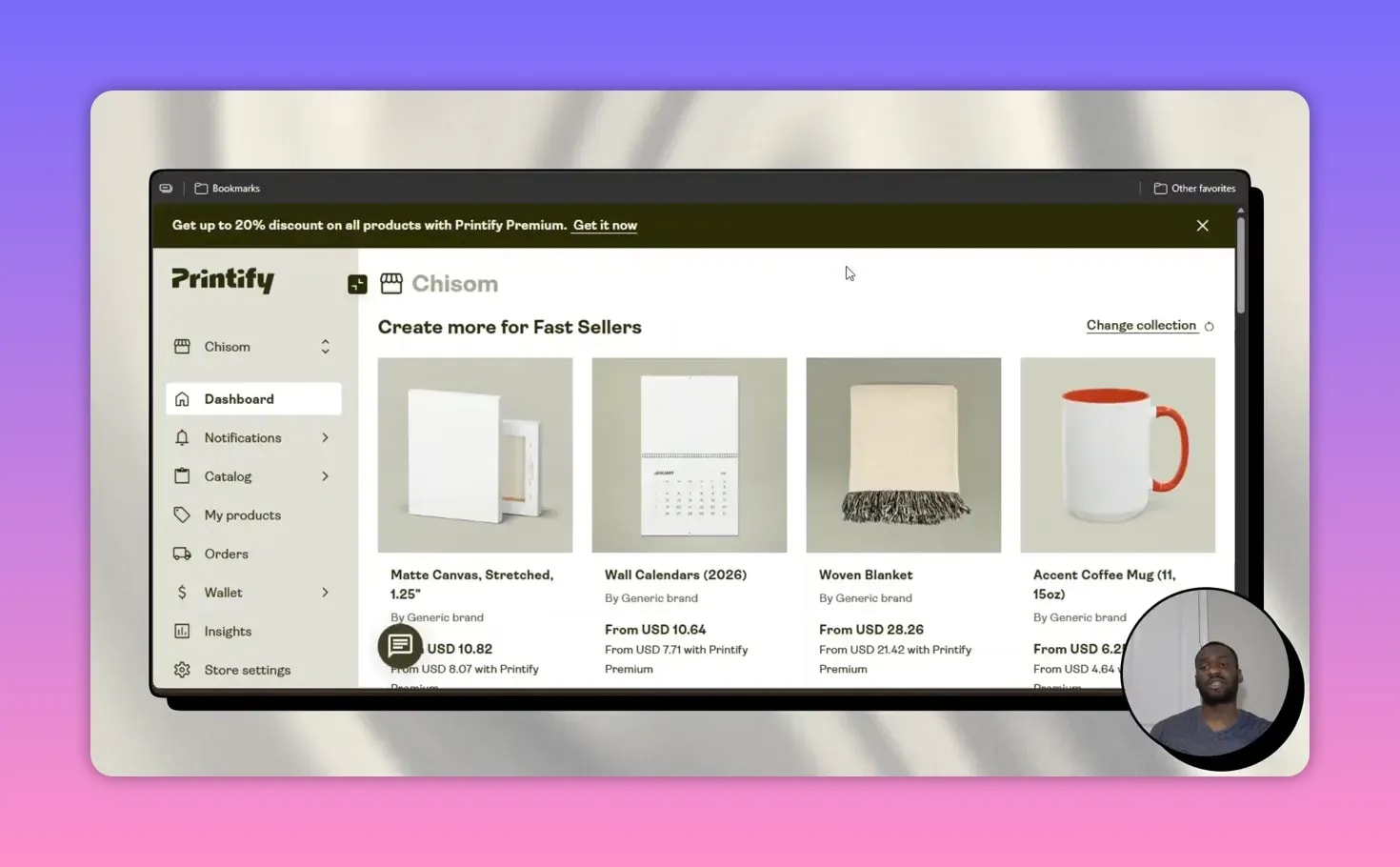
Before I even think about marketing, I need a system for hosting and managing my products. One platform I use for this is Printify.
It is useful because it gives me a way to create and manage a large product catalog without holding inventory. That matters a lot when I want to Promote Print On Demand Products across different niches and product types.
Printify also has a free subscription option, which makes it easier to get started without piling on more upfront costs. If the whole point of print on demand is to stay lean, then your promotional setup should follow the same logic.
At this stage, the goal is simple:
- Upload your designs
- Build out your product catalog
- Make sure your listings are ready to share
- Prepare assets you can use in both video and image promotions
Once that foundation is in place, I move into content creation.
Step 2: Use AI-generated videos to create promotional content at scale
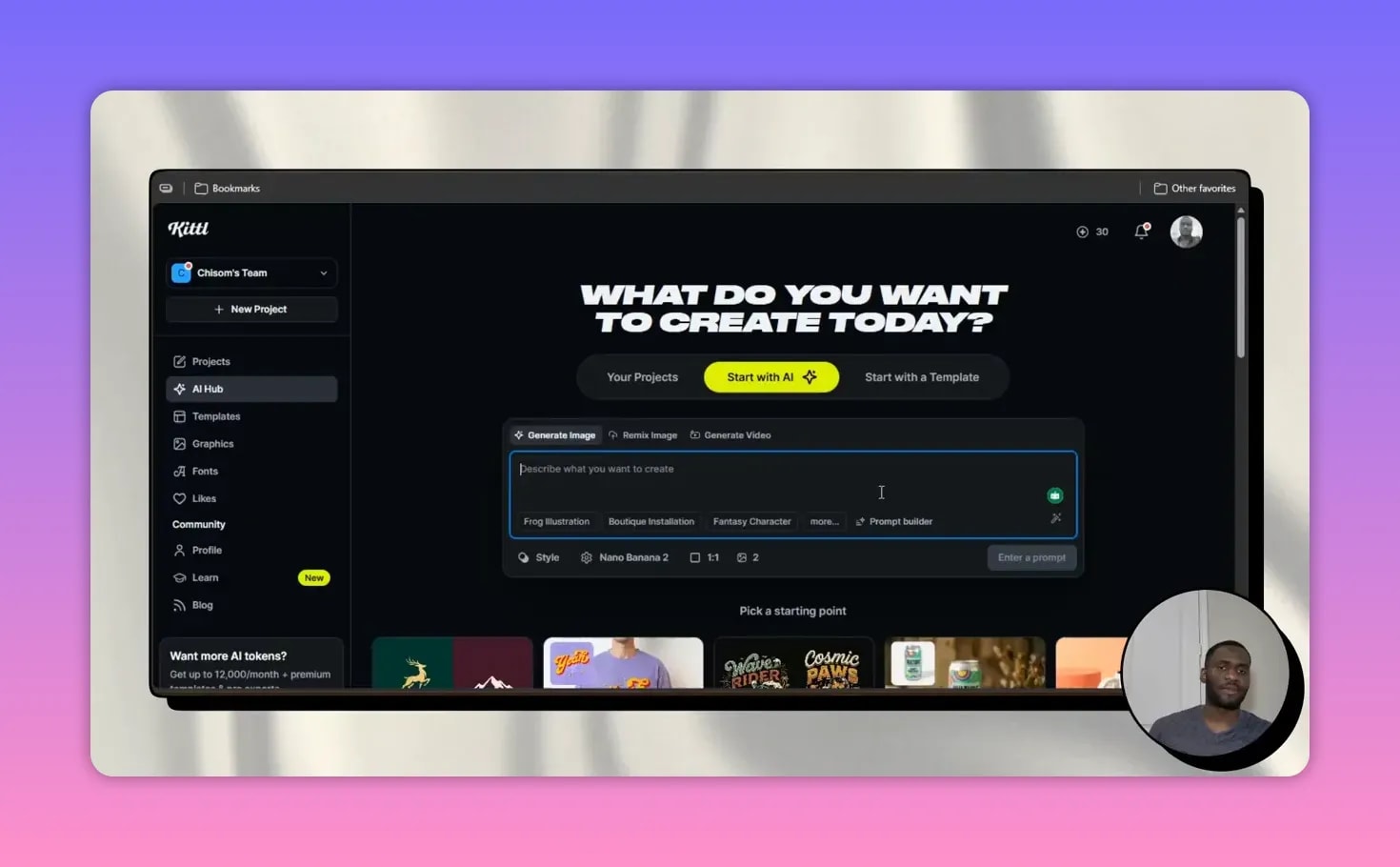
One of the fastest ways I have found to Promote Print On Demand Products is by creating short promotional videos with AI. The tool I use for this is Kittl.
Kittl gives me a few ways to start:
- Start with AI
- Use a template
- Upload my own design or mockup
If I want a fresh concept, I can start with AI and type in what I want. If I already have a shirt design or graphic, I can upload it and build around that instead.
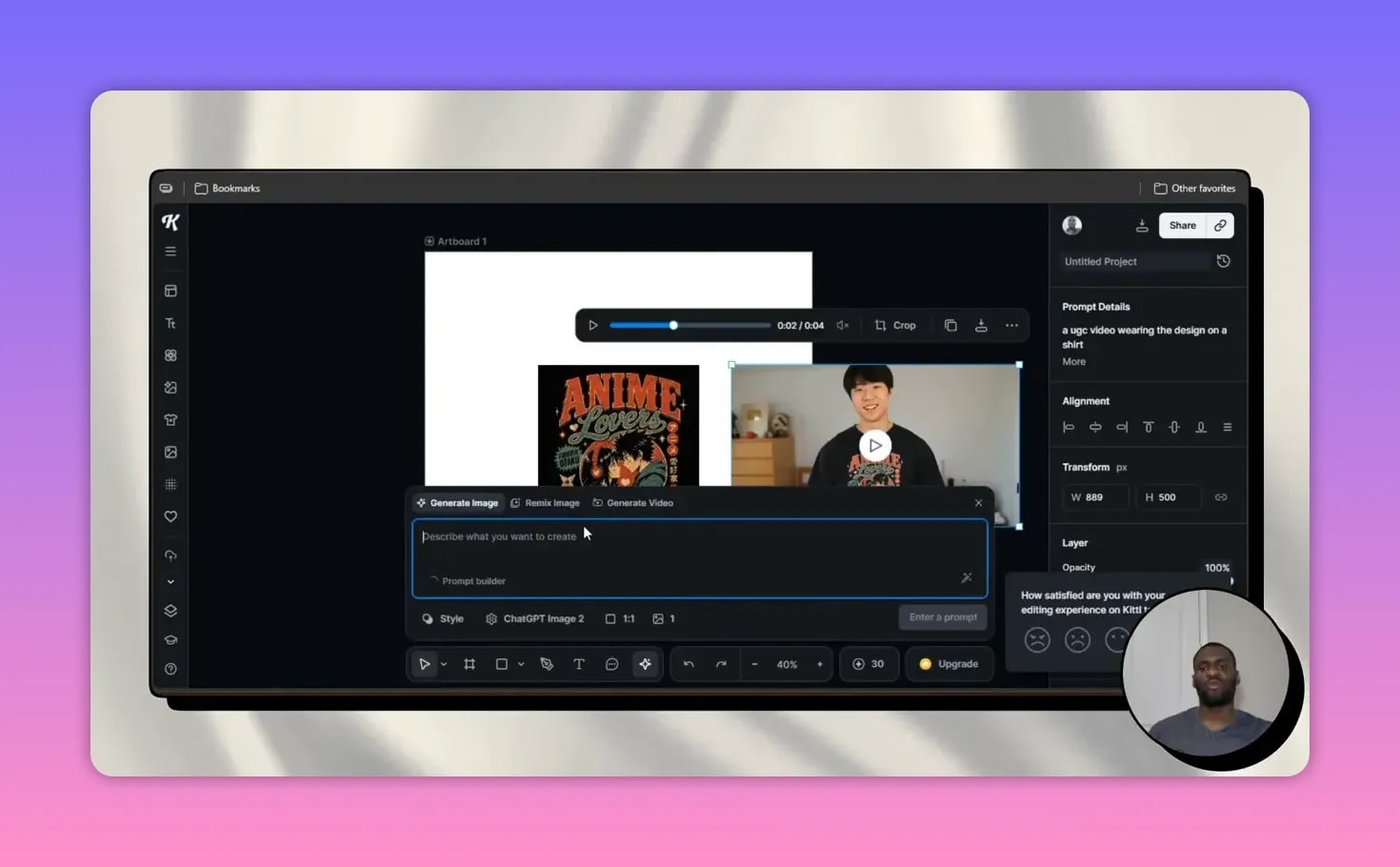
This is where it gets really useful for marketing. I can take my design and have AI generate content that makes it look like a real person is wearing or showcasing the product. For example, I used an anime-themed design and paired it with an AI-generated person to present the shirt in a UGC-style format.
That means I am able to create the feel of user-generated content without having to hire someone every single time.
The basic process looks like this:
- Create or upload your design
- Add the design image into the tool
- Write a prompt describing how you want the product shown
- Generate the promotional video
- Export it in the format you need for social platforms
For the prompt, I keep it straightforward. Something like asking the tool to place the image on a shirt and generate a UGC-style video of someone wearing the design is enough to get usable results.
If I am posting to TikTok or Instagram, I make sure the content is vertical. That part matters. A good design in the wrong format can easily underperform.
And this is the key point a lot of people miss. You do not create one video, upload it once, and expect magic. Going viral on TikTok, Instagram, Facebook, or even YouTube has a lot to do with volume.
If you want to Promote Print On Demand Products with video, create as many variations as you reasonably can. Different angles, different mockups, different hooks, different products.
Video content helps in two big ways:
- It can convert directly
- It can build brand awareness even when it does not convert immediately
If you need extra help writing social captions for those posts, a tool like this AI social media caption generator can make the publishing process faster.
Best Free AI Writing Tools! |
|
🎁I Have Free AI Tools for You! |
| Access Now! |
Step 3: Add Pinterest to your strategy for higher-intent traffic
Video is great for reach, but I do not rely on video alone. If I really want to Promote Print On Demand Products consistently, I also use image content, especially on Pinterest.
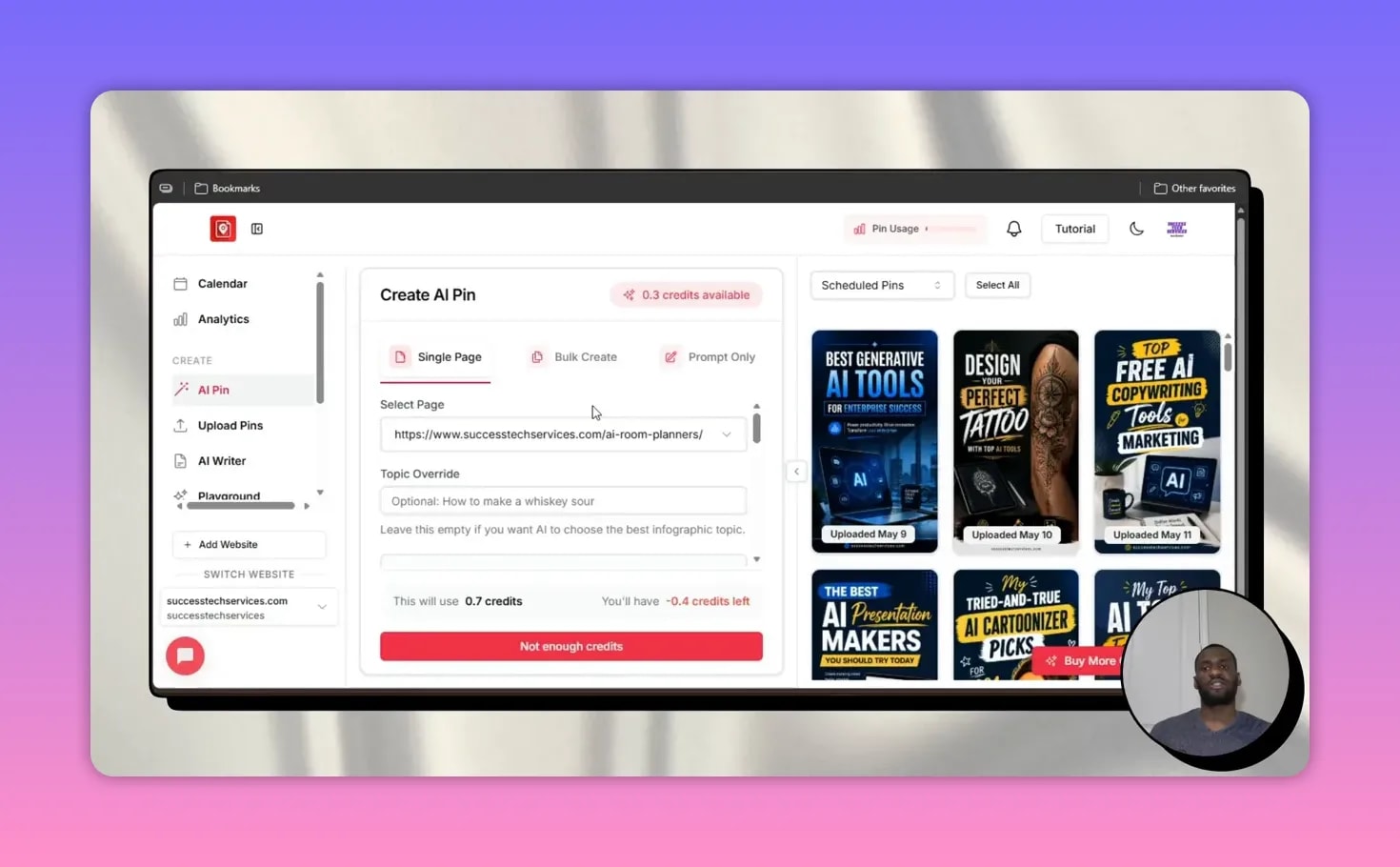
The tool I use here is BlogToPin.
What I like about BlogToPin is that it can pull content directly from my website or store and help me create pins in bulk. This saves a lot of time, especially if I have a lot of products or pages to promote.
You are not limited to one type of site either. You can connect platforms such as:
- WordPress
- Etsy
- Shopify
- Redbubble
- Zazzle
After I connect my store, the tool can generate multiple images based on my pages. It also helps with the rest of the Pinterest workflow, including:
- Pulling in the page title
- Creating descriptions
- Adding alt text
- Assigning content to Pinterest boards
- Scheduling pins on a calendar
That means I can automate a big chunk of my Pinterest marketing instead of manually designing and scheduling every single pin.
Step 4: Understand why Pinterest traffic is so valuable for print on demand
There is a big difference between someone casually scrolling through a video feed and someone clicking on a Pinterest image. On Pinterest, the traffic is usually much more intentional.
That is why I pay close attention to it when I want to Promote Print On Demand Products. A click from Pinterest often has stronger buying intent than a casual video impression.
Image content on Pinterest can get a lot of traffic, and more importantly, it can send people directly to your website or product page.
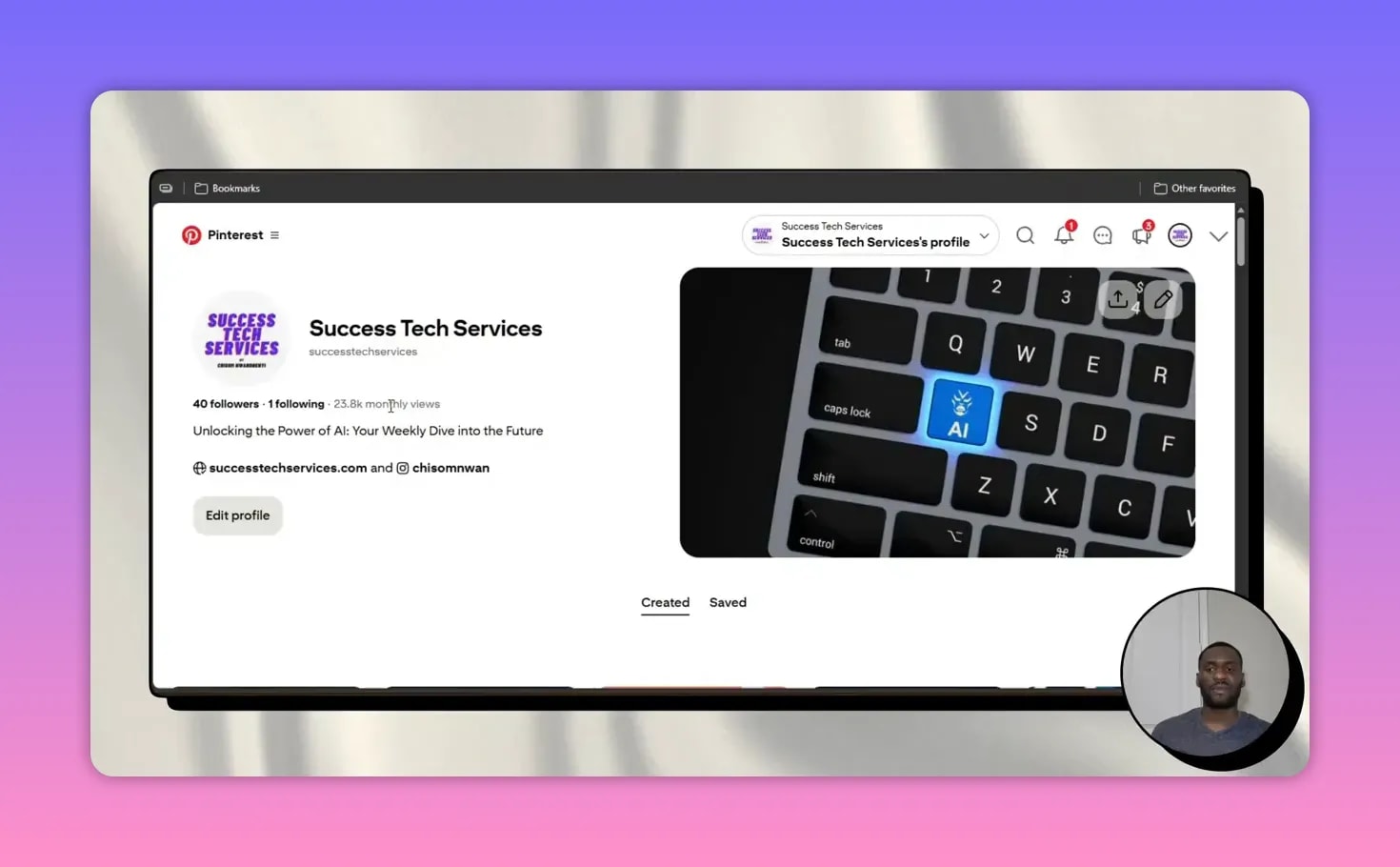
One of the examples I shared was a Pinterest account with only around 40 followers but about 23,000 monthly views. That is a good reminder that follower count is not everything on Pinterest.
You can still get serious visibility and meaningful traffic even with a small audience.
That matters for print on demand because every extra click can turn into a random sale later. Since there is no warehouse of unsold stock sitting around, those unexpected order emails are pure upside.
Step 5: Track outbound clicks, not just impressions
Analytics matter, but I focus on the right metric.
When I review Pinterest performance, I care much more about outbound clicks than impressions. Impressions look nice, but they do not necessarily mean traffic or sales.
Outbound clicks tell me whether people are actually leaving Pinterest and going to my website.
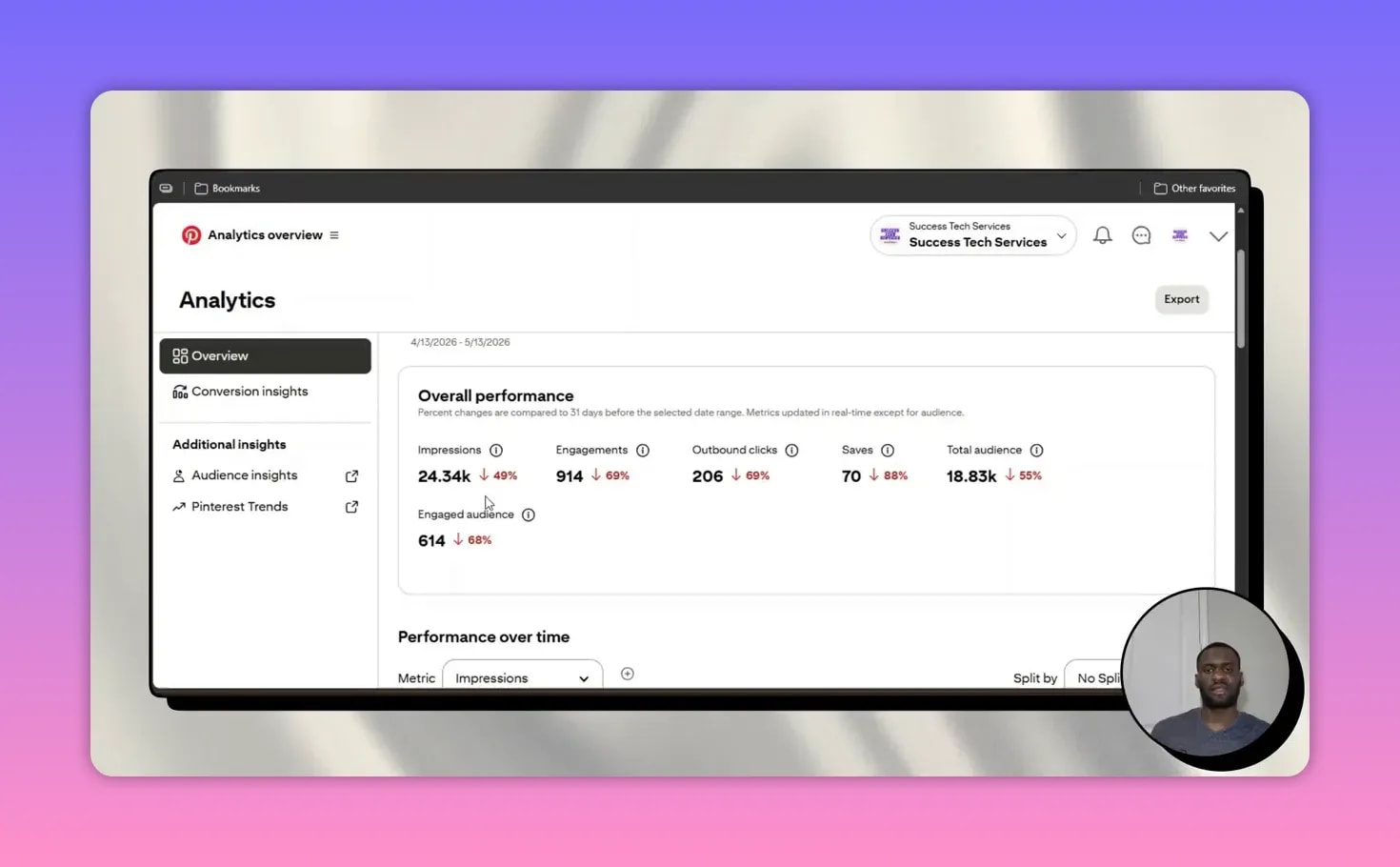
For example, I highlighted a pin that generated 56 clicks to a regular blog post. Those clicks add up. Over time, they can drive a meaningful amount of traffic and conversions.
I also pointed out that performance can fluctuate from month to month. Pinterest goes up and down. That is normal. What matters is the longer-term trend and whether the platform is sending traffic consistently.
Looking at a 90-day window gives a better picture than obsessing over one short dip. In the example shared, the account had generated over 2.5K clicks in the last 90 days. That is the type of metric I want to see when I am trying to Promote Print On Demand Products without ad spend or influencer fees.
If you are building your own content-based traffic system, learning basic SEO also helps. For WordPress users, this guide on setting up Rank Math Pro is useful for improving search visibility alongside Pinterest traffic.
Step 6: Combine video content and image content instead of choosing one
The real strategy here is not video versus Pinterest. It is video plus Pinterest.
When I want to Promote Print On Demand Products effectively, I use both because they do different jobs.
- Video content helps me reach more people and build awareness
- Image content helps me capture more intentional clicks and potential conversions
That combination is powerful because print on demand usually requires testing. You do not always know which design, product, or niche is going to hit.
So instead of paying heavily upfront for influencer campaigns, I use scalable content systems that let me test more products with less risk.
A simple version of the workflow looks like this:
- Create products in your print on demand platform
- Generate AI videos for social media promotion
- Create and schedule image pins in bulk
- Track outbound clicks and traffic
- Keep publishing consistently
- Let the winning products reveal themselves over time
Step 7: Be patient and let volume do the work
If there is one thing I would stress, it is this: consistency beats hoping for one lucky viral post.
A lot of people try one piece of content, do not see instant results, and assume the product is the problem. Sometimes the real issue is simply that there was not enough output.
To Promote Print On Demand Products well, I need enough content in the market to give my products a real chance.
That means:
- More videos
- More pins
- More product variations
- More testing
Because the business model is low inventory and low upfront risk, this kind of long-game promotion strategy makes sense. You are not trying to force every product to be a bestseller. You are creating enough distribution for the market to tell you what it wants.
FAQ
What is the cheapest way to promote print on demand products?
One of the cheapest ways to Promote Print On Demand Products is to use AI tools for content creation and automation instead of paying influencers. AI-generated videos can help with social media reach, while Pinterest automation can help drive ongoing traffic and clicks.
Why use Pinterest for print on demand?
Pinterest is valuable because the traffic is often more intentional. People who click on pins are usually interested in learning more or buying, so conversion potential can be stronger than casual social scrolling.
Can I promote print on demand products without followers?
Yes. Pinterest is a good example of a platform where you can still get strong visibility and clicks even with a small follower count. What matters more is the quality and consistency of your content.
What should I track when measuring Pinterest performance?
Track outbound clicks more closely than impressions. Impressions show reach, but outbound clicks show whether people are actually going to your website or store.
Is video content still worth it if it does not convert right away?
Yes. Video content can drive direct sales, but it can also build brand awareness. Even when it does not convert immediately, it can still introduce your product to more people and help future content perform better.
What tools can help promote print on demand products?
A practical stack includes Printify for product creation, Kittl for AI-powered promotional videos, and BlogToPin for Pinterest image creation and scheduling.
Final thoughts
If I want to Promote Print On Demand Products without draining my budget, I do not start with influencers. I start with systems.
I use a print on demand platform to host the products, AI video tools to create social content at scale, and Pinterest automation to generate steady, higher-intent traffic. Then I measure what actually sends clicks and keep going.
That is a much more sustainable approach for a business model built around flexibility, testing, and low upfront risk.
Create more content, publish consistently, and pay attention to the traffic that matters. Over time, those random sale notifications can turn into a real business.