

Search engines, AI search systems, and AI assistants can tell when “Apple” means a fruit, a company, or a record label. A standard keyword report usually can’t make that distinction.
That’s why entity SEO tools matter for content teams that want to publish clear, connected, trustworthy content. They help identify the people, places, products, organizations, and concepts that make a page unambiguous to search engines and create a clearer knowledge graph.
The right stack makes content planning sharper, schema more reliable, and internal links more useful. It also supports a maintainable entity optimization process.
Key Takeaways
- Entity SEO tools help content teams identify, disambiguate, and connect people, places, products, organizations, and concepts across a site.
- Choose tools based on the operational bottleneck: InLinks for entity-led content and internal linking, Schema App for enterprise schema governance, and WordLift for a broader managed knowledge graph program.
- Supporting tools have narrower roles: Wikidata helps verify canonical entity IDs, Semrush supports demand and competitive research, and AlsoAsked maps question relationships.
- Build and maintain an entity dictionary with approved names, identifiers, relationships, source URLs, schema types, and internal owners before automating entity workflows.
- Measure entity SEO through process improvements, topic-cluster performance, structured data quality, conversions, brand mentions, and citations in AI search systems.
How entity SEO tools differ from keyword software
A keyword is a string of words. An entity is a distinct thing with an identity, attributes, and relationships that help search engines and AI assistants interpret its meaning.
For example, “Apple” is a keyword. Apple Inc. is a named entity with a known identity, products, founders, headquarters, competitors, and other connected facts. Wikidata assigns Apple Inc. the identifier Q312. That identifier supports disambiguation between Apple Inc., apples as fruit, Apple Records, and unrelated uses of the same word.
Traditional SEO platforms help teams estimate demand, review rankings, and compare competitors. Those jobs still matter. However, entity-focused software asks different questions:
- Which entities does this article cover, and where are the important entity gaps?
- Is the page clearly about the right company, product, location, or person?
- Which related pages should connect through internal linking?
- Can structured data, using schema.org vocabulary, describe those entity relationships in machine-readable form?
A useful semantic SEO, NLP, and knowledge graph primer can help teams see how natural language processing and a knowledge graph fit together. The practical goal is simple: publish content with clear subjects, well-supported claims, and meaningful relationships between pages.
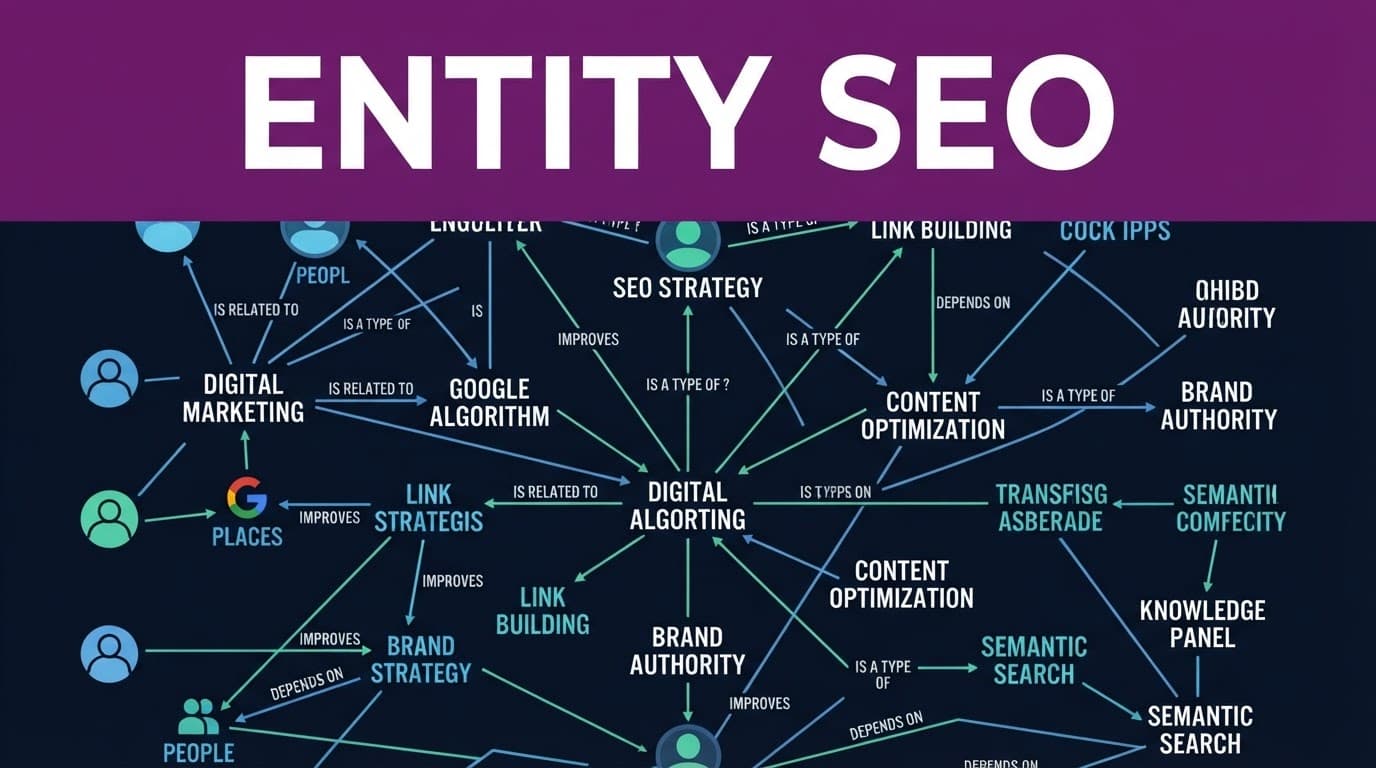
Content briefs about “CRM software” become more useful when they identify related entities such as Pipedrive, HubSpot, sales pipelines, lead scoring, email automation, and customer data platforms. Those connections can shape focused topic clusters, build topical authority, and help writers explain how the concepts connect instead of repeating a keyword in slightly different sentences.
A fair way to compare entity SEO platforms
Content teams should judge each platform against the same operating needs. A platform that excels at link management may be a poor choice for schema governance. Likewise, a broad SEO suite can support research without serving as an entity-resolution system.
| Tool | Primary operational role | Pricing model and availability | Deployment and integrations | Main limitation and best fit |
|---|---|---|---|---|
| InLinks | Entity analysis, entity gaps, contextual internal linking, About and Mentions markup | Limited free entry, with paid plans reported from $49 per month | JavaScript-delivered JSON-LD and Google Analytics integration | Best for editorial sites that need entity-led content and linking controls |
| Schema App | Structured data creation, schema.org governance, and schema markup deployment | Commercial platform with quote-based pricing | Highlighter for scale and Editor for page-by-page markup | Best for larger organizations with schema owners and technical workflows |
| WordLift | Knowledge modeling, content optimization, schema, audits, and rank tracking | Tiered commercial plans | Schema and data-integration tools, with managed support on higher plans | Best for teams that want a broader managed content program |
| Wikidata tools, including Wikidata Query Service | Canonical entity IDs and SPARQL research | Free public service | Browser-based queries and data exports | Best as a reference layer, not a content optimizer |
| Semrush | Keyword, competitive, and ranking research | Paid web-based subscription | Google data connections and reporting workflows | Best as a planning companion, not a dedicated entity platform |
| AlsoAsked | Question graph and People Also Ask research | Paid access with usage-based plan limits | Web-based research workflow | Best for question coverage through AlsoAsked, not entity linking or schema deployment |
The table reveals a useful buying rule: knowledge graph management is only one part of the workflow. Choose software that removes your largest operational bottleneck first, using Semrush as a planning companion and AlsoAsked as a question-coverage companion when needed.
The leading entity platforms for content operations
InLinks for contextual links and entity gaps
InLinks is one of the clearest choices for teams that want entity optimization to change day-to-day publishing work. Its core value is contextual internal linking based on entity relationships, rather than simple keyword matches.
It also supports semantic SEO analysis, topical planning, and automated schema for About and Mentions relationships. Its markup is delivered through JavaScript in JSON-LD format. Current paid entry plans are commonly listed from $49 per month, with some plans using credits.
The feature set is useful, but automation still needs editorial rules. Review suggested anchors, block irrelevant pages, and avoid creating links that interrupt the sentence. A link is only helpful when it gives readers a logical next step.
InLinks fits content-rich sites with enough existing pages to create meaningful relationships. Pair it with a technical crawler and Google Search Console data, because entity links won’t solve indexation, redirects, or thin content.
Schema App for enterprise schema governance
Schema App focuses on structured data governance at scale. It is less of a writing platform and more of a system for managing how a large site describes products, services, locations, authors, organizations, and other entities.
Its Highlighter product can deploy structured data across templates without requiring teams to hand-code every page. Schema App Editor supports page-level markup and includes the full schema.org vocabulary, while highlighting properties Google classifies as required or recommended for eligible rich results.
Public pricing isn’t prominently listed, so larger teams should expect a sales conversation and implementation scoping. That makes Schema App a better fit for enterprises, multi-location businesses, publishers, and ecommerce sites with complex templates.
The platform doesn’t identify a weak article brief or write an internal-linking plan. It needs accurate source data, clear ownership, and a content team that can keep names, locations, offers, and product facts current.
WordLift for a managed knowledge graph program
WordLift combines several semantic SEO functions in one commercial package. Its current product materials include a knowledge graph, AI-powered content creation, SEO research, content audits, performance tracking, schema markup, structured data support, and data-integration tools.
Its higher-tier approach has a managed-service feel. Public US pricing includes an option listed at $879 per month when billed yearly, or $1,100 month to month. Pricing and inclusions can vary by plan, so confirm the current scope before committing.
This makes WordLift a serious investment, not a casual plug-in purchase. It suits teams that need knowledge graph support, schema work, and ongoing strategic guidance under one vendor relationship.
A knowledge graph is only as dependable as the facts inside it. Assign a business owner to approve entity names, synonyms, product relationships, and source URLs before publishing changes.
For a second view of the category, compare the evaluation criteria here with this entity-tool comparison. Focus on the operational fit, not a generic feature checklist.
Supporting tools that solve narrower problems
Wikidata tools for disambiguation
Wikidata is a public knowledge base, and its Wikidata Query Service lets teams search it with SPARQL. It is not a content optimizer, but it is an excellent reference layer for a knowledge graph and ambiguous names.
Start by using Wikidata tools to find the correct entity and record its QID. This disambiguation step helps separate similar records. Then check aliases, description, official website, parent organization, country, industry, and geographic data. For programmatic work, a query can return organizations in a chosen city with an official website and coordinates. Request a JSON result, store the QID in your internal entity dictionary, and keep the source URL beside it.
Multi-location businesses need extra care. Starbucks Corporation and an individual Starbucks store are related, but they are not the same entity. Give each location its own address, phone number, hours, service area, and verified schema markup, using the appropriate schema.org type for accurate structured data.
A canonical ID resolves identity. It does not prove quality, authority, or relevance for a page.
Public knowledge bases can contain incomplete or outdated records, so confirm important business facts against first-party sources. Never treat a QID as permission to copy descriptions or claims without checking them.
Semrush for competitive planning around entities
Semrush is a broad SEO suite, not a dedicated entity recognition platform. It earns a place in an entity workflow because its keyword, ranking, competitor, and topic data helps teams decide where entity coverage could create commercial value.
Use it to find pages that rank for related concepts, identify missing supporting topics, and monitor the search terms around an entity cluster. Then send that research into a specialized semantic workflow or custom entity dictionary for deeper analysis.
The suite won’t reliably resolve every proper noun, map entity data, or govern schema relationships. Treat it as the demand and competitive-research layer. A practitioner discussion of semantic SEO offers a useful reminder that clusters need both query data and concept coverage.
AlsoAsked for question relationships
AlsoAsked maps People Also Ask-style question paths. Those paths can reveal search intent before and after a core query, while AlsoAsked exports preserve the findings for editors.
That makes it useful during briefing, especially for comparison pages, tutorials, and product-led content. A team can use AlsoAsked to find the questions readers ask before and after a core query. AlsoAsked’s question coverage helps shape a useful brief. AlsoAsked can expose gaps before publication, but it cannot establish the meaning or identity of every term.
However, questions are not entities. “How does website markup work?” is a useful question, while the underlying standard needs an accurate definition and relationship to other concepts. Use AlsoAsked to shape headings and follow-up sections, but don’t treat it as a replacement for source research on specialized subjects. Pair AlsoAsked with Wikidata tools or entity analysis software when the topic includes brands, people, locations, medical terms, or products with ambiguous names.
Build an entity dictionary before automating anything
Software can surface entity suggestions, but your team needs a source of truth for its knowledge graph. A practical entity dictionary can live in a spreadsheet, database, or content operations platform. The format matters less than clear ownership and consistent fields.
Build it in this order:
- Start with revenue-driving pages, core services, priority products, and major editorial hubs instead of trying to map the whole site at once.
- Record the preferred entity name, canonical identifier or QID, entity type, aliases, related entities, source URLs, recommended schema type for structured data, and internal owner.
- Separate the brand entity from locations, people, job titles, products, and product categories. Clear disambiguation prevents vague markup and conflicting page language.
- Map each entity to existing URLs, missing content, internal linking opportunities, and the pages that should reference it. Define entity relationships with a reader-facing reason, not merely a technical one.
- Review entries when a product changes, a location closes, an acquisition occurs, or a subject area expands.
This process catches a common AI search problem. Large language models powering AI search often favor familiar SEO words found together in training material. That can produce confident suggestions for platforms that track rankings or write content briefs. Such tools may not identify named entities, link them to the right records, or manage a knowledge graph.
Test every recommendation against product documentation and a trial account. Use Wikidata tools to verify canonical IDs or QIDs when checking an entity’s identity. Compare Semrush recommendations with that evidence, rather than treating them as proof of entity support.
Ask concrete questions: Does the tool identify entities? Can it disambiguate a name? Does it create or manage relationships? Can it deploy valid schema? Can editors override its suggestions?
The difference between automated extraction and verified business context matters. An entity-based SEO overview can provide additional perspective, but your own taxonomy must reflect your products, customers, and site structure.
The minimum viable entity and schema setup
Small businesses don’t need an enterprise knowledge graph to gain value from entity-focused SEO. Start with consistent site-level structured data for an Organization or LocalBusiness brand entity. Use the real business name, official website, visible contact details, and verified social profiles. Add only genuine sameAs references.
Next, apply page-level structured data and schema markup that matches visible content. Choose the relevant type and properties from the schema.org vocabulary, then validate the generated JSON-LD where appropriate. An Article page should identify its author and publisher. A product page should describe the actual product. A location page needs the correct address, opening hours, and local contact information. Avoid adding schema for content readers can’t see.
Then create a small editorial dictionary for your 20 to 30 highest-value entities. Use internal linking with descriptive anchors for related articles, define concepts near the top of pages, and cite credible sources for claims that need proof.
Schema doesn’t guarantee rankings, rich results, AI search visibility, AI Overviews placement, or inclusion and citations in AI assistants such as ChatGPT. It reduces ambiguity when the content is already helpful and accurate. For broader workflow support, these Free AI Tools can help teams research, draft, and review content before publishing.
Measure visibility, citations, and revenue signals
Entity measurement needs more than a ranking dashboard. Track whether readers and systems understand your content more clearly. Check whether the site’s knowledge graph is becoming more coherent.
Start with process metrics: the percentage of priority pages mapped to entities, approved entity relationships, missing connections resolved, valid structured data, approved internal links, and briefs using the entity dictionary. These metrics show whether the process is actually happening.
Next, track search outcomes across topic clusters. Watch impressions, clicks, click-through rate, rankings, assisted conversions, and leads from pages connected to priority entities. Compare like-for-like page groups over a meaningful period, looking for stronger visibility, conversion performance, and topical authority across connected clusters.
AI search visibility needs its own log. Record the prompt, answer engine, date, location, brand mention, cited URL, cited competitor, and any AI Overviews appearance. A mention and a citation are different outcomes. Citation tracking is directional because AI responses vary by user and query context.
Teams that want a wider view of this work can also review Answer Engine Optimization software. Clear answer sections, reliable sources, and structured entity information work better together than any single tactic.
Choosing entity SEO tools without overbuying
The right entity SEO tools depend on the work your team needs to complete every week. Let your entity optimization bottleneck guide the choice.
Choose a content and linking platform when your biggest problem is disconnected content, weak internal linking, and inconsistent topical coverage. Choose Schema App when schema governance across templates, locations, or product catalogs requires a dedicated operational system. Choose WordLift when your budget supports a broader knowledge graph and managed program.
For a smaller team, Wikidata tools, a carefully maintained entity dictionary, a schema plug-in, Semrush research, and AlsoAsked question mapping can create a strong starting stack. Together, they can support a lightweight knowledge graph, so add specialized software only after the workflow proves its value.
A 2026 entity SEO roundup can help you compare vendor options, but a pilot will tell you more.
Start with one of two comparable topic clusters, using Semrush to establish a demand baseline. Map its entities, search intent, and AlsoAsked question paths, then improve internal links and structured data. Use Semrush to compare the treated cluster with an untouched one, then track visibility, citations, and AI Overviews.
For broader planning beyond entity work, these tools for AI search visibility can help content teams connect SEO research with answer-engine goals.
Frequently Asked Questions
What are entity SEO tools?
Entity SEO tools help content teams identify and organize the distinct people, places, products, organizations, and concepts covered by their content. They can support entity disambiguation, knowledge graph development, internal linking, structured data, and topic planning.
How do entity SEO tools differ from keyword tools?
Keyword tools analyze search terms, demand, rankings, and competition, while entity-focused tools analyze the underlying things and relationships represented by those terms. For example, they can distinguish Apple Inc. from apples as fruit or Apple Records.
Which entity SEO tool should a content team choose?
Choose based on the workflow problem that creates the most friction. InLinks suits entity analysis and contextual internal linking, Schema App fits enterprise schema governance, and WordLift is better for teams seeking a broader managed knowledge graph program.
Do small businesses need an enterprise knowledge graph?
No. Smaller teams can start with a maintained entity dictionary, consistent Organization or LocalBusiness schema, accurate page-level markup, Wikidata research, and descriptive internal links for their highest-value entities.
How should teams measure entity SEO performance?
Track process metrics such as mapped pages, approved relationships, valid structured data, and internal links, then connect them to impressions, clicks, rankings, conversions, and leads. For AI search, record brand mentions, cited URLs, competitors cited, and AI Overviews appearances while remembering that these results vary by query and user context.
Final thoughts
Entity SEO gives your content a clearer identity. Verified entities and useful relationships help search systems interpret a coherent knowledge graph without guessing what a page means.
Start with information your team can verify and relationships readers can use, then choose software your team can maintain. Clear information architecture will outlast any individual tool or short-term trend.