
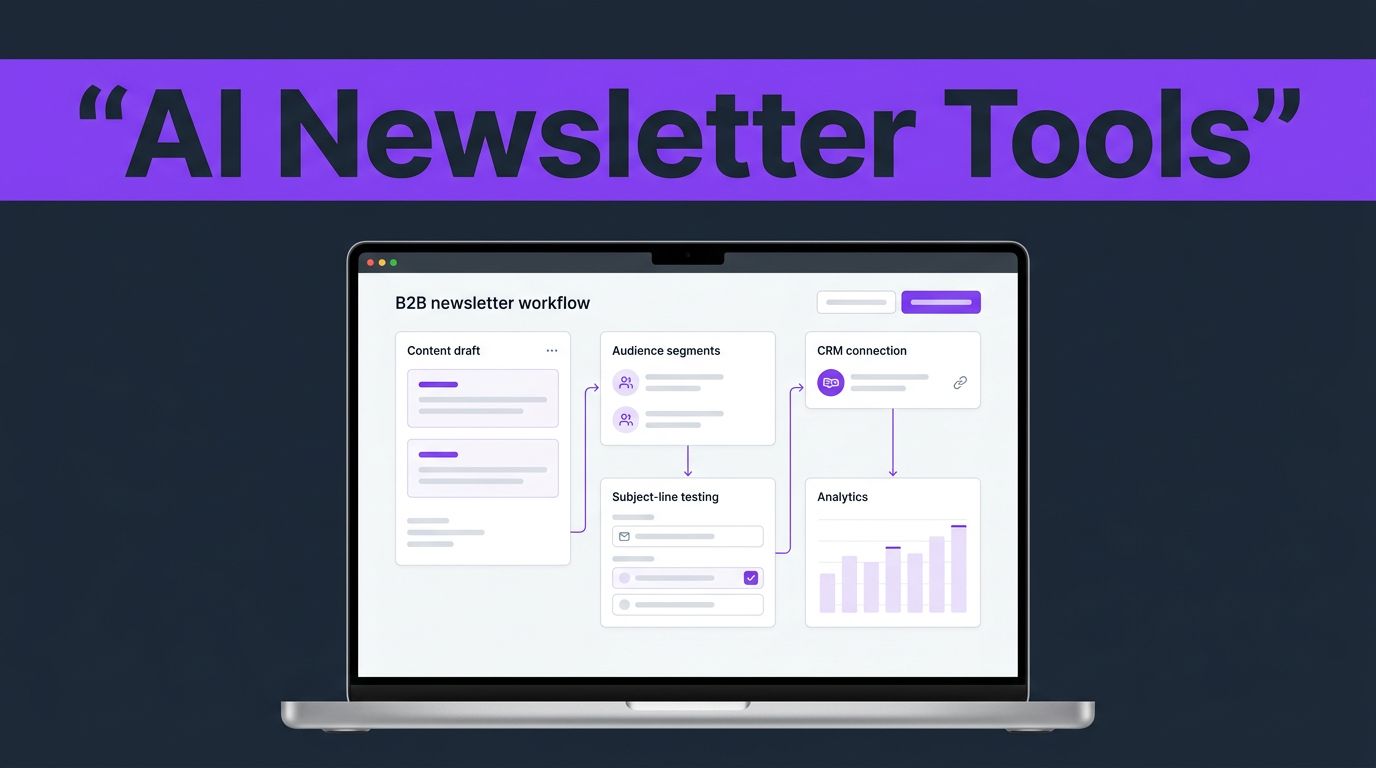

A B2B newsletter can build demand before a prospect books a demo. Yet teams often lose time turning product updates, expert insights, and campaign data into a consistent program.
The right tools reduce that workload while keeping your brand voice under human control. They help teams research, draft, personalize, test, and report, while marketers approve claims and guide audience strategy.
The best choice depends on where customer data lives, your content strategy, and the newsletter’s role in pipeline generation.
Key Takeaways
- Choose an AI newsletter tool based on your revenue motion, CRM context, content strategy, and reporting needs—not on AI feature counts alone.
- HubSpot and ActiveCampaign fit CRM-led nurture programs, Beehiiv supports publication and audience growth, and MailerLite or GetResponse suit leaner email operations.
- AI should create drafts, subject line options, audience variants, and workflow suggestions while marketers verify claims, protect customer data, and approve every send.
- Strong deliverability still depends on SPF, DKIM, DMARC, permission records, list hygiene, segmentation, and disciplined testing.
- Pilot the stack with clear baseline metrics and exit criteria before replacing an existing email marketing platform or migrating every subscriber.
What B2B Teams Should Expect From AI-Powered Newsletter Software
An AI newsletter generator can create a credible first draft, but a complete system still needs to handle the work around writing. B2B teams need segmentation, CRM context, email deliverability controls, approval paths, reporting, and integrations that connect audience engagement to lead status.
A useful stack has three layers. First, an email marketing platform, often an email service provider, manages contacts, sending reputation, delivery, and operational controls. Next, an AI writing assistant helps shape subject lines, outlines, repurposed content, and audience variants. Finally, your CRM and analytics tools show whether readers progress into qualified conversations and opportunities, while supporting automated customer journeys.
A polished template or email automation alone won’t solve a weak workflow. AI content generation can turn a product webinar into a newsletter section, but people must verify the technical claim, confirm the launch date, and decide whether a customer segment should receive the message.
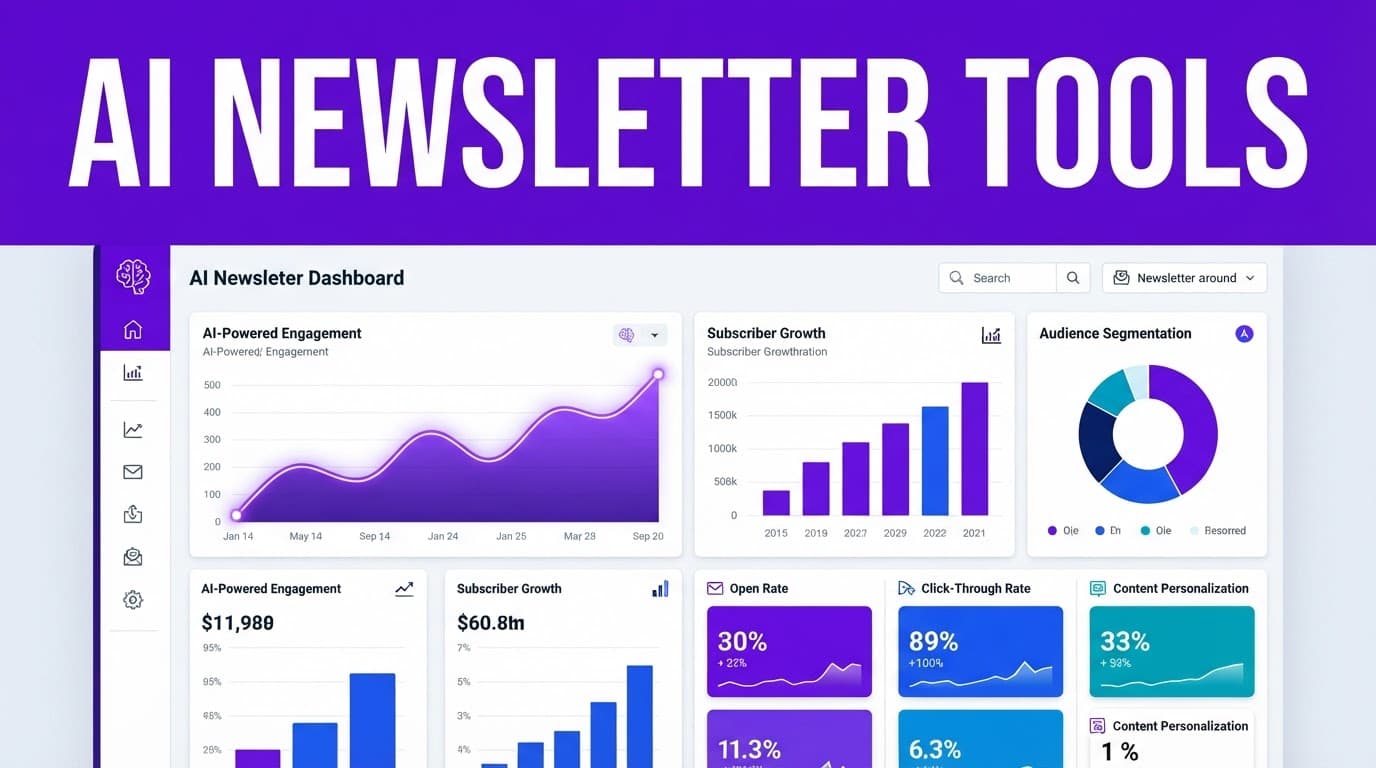
The best systems give AI a controlled role. They let it speed up repeatable work. A brand voice feature supports consistency, while people retain positioning and final approval. A recent hands-on AI email marketing comparison is useful for building a shortlist, but B2B buyers should test each platform against their CRM, lead-routing rules, and security requirements.
AI should draft within a documented process, not become the process. A fast email with an unsupported claim creates more work than a slower approved draft.
Best AI Newsletter Tools for B2B Content Teams in 2026
No single platform wins for every B2B content team. HubSpot suits CRM-led demand generation. ActiveCampaign gives smaller teams more automation depth. Beehiiv excels when the newsletter is a media asset, while MailerLite keeps a simpler program affordable.
An AI newsletter generator may be embedded in a broader marketing platform or used separately in a writing workspace. This table compares the strongest options by operating model, integrations, and email deliverability rather than generic feature counts.
| Tool | Best fit | Useful AI capabilities | B2B limitation to assess |
|---|---|---|---|
| HubSpot | Teams running marketing and sales through one CRM | AI-assisted copy, audience context, workflow support, reporting | Advanced automation, governance, and reporting depend on higher subscriptions |
| ActiveCampaign | Behavioral nurture programs with many branching paths | AI-assisted automation building, email creation, testing support | Costs and implementation effort can rise with contacts and automation complexity |
| Beehiiv | Thought leadership publications and audience growth | AI writing tools, web publishing, growth features, testing | CRM and sales-process depth require integrations or external systems |
| MailerLite | Lean teams that need newsletters and basic automation | AI writing assistant and Smart Sending on eligible plans | Less suited to complex account-based marketing operations |
| GetResponse | Teams combining email campaigns with lead capture events | AI email generation and campaign-building tools | Review CRM fit and reporting depth before standardizing |
| Hoppy Copy | Teams that need a specialist email-writing workspace | Subject lines, campaign ideas, sequences, brand-oriented prompts | It needs a separate email platform for contact data and delivery |
HubSpot for CRM-connected newsletters
HubSpot is the strongest option when newsletters are one touchpoint in a wider lead-nurture system. Marketing teams can use CRM properties, lifecycle stages, form activity, and sales context to define audiences. That makes it easier to send a product adoption email to customers while sending a category education email to early-stage prospects.
Its AI writing assistant is most useful after your team has clean source material. Feed the system an approved product brief, a customer quote cleared for use, and a defined call to action. Then use the draft as a starting point inside a campaign that connects engagement with CRM records.
HubSpot also fits teams that need formal governance. Test permissions, approval expectations, and reporting during procurement. Availability changes by subscription and user role within a complex marketing CRM setup. The platform can become expensive when a team needs advanced automation and enterprise controls, so calculate total seats, contact tiers, onboarding, and integration costs.
ActiveCampaign for behavioral email automation
ActiveCampaign works well when a newsletter supports a multi-step nurture path. A subscriber might receive a monthly insight email, visit a pricing page, download a guide, and then move into a sales-assisted sequence. Its automation builder and marketing CRM make those paths more practical than a newsletter-only tool.
AI-assisted automation creation can reduce setup time, especially for an experienced marketer who already knows the event triggers and exit rules. Still, no prompt knows your lead definitions. Your demand generation lead must decide what behavior warrants a follow-up and when sales should enter the conversation.
This platform is a strong middle ground for B2B teams that have outgrown simple broadcasts but don’t need a full marketing suite. Before buying, map your core workflows on paper. If the team can’t explain the journey without the software, the automation will likely become difficult to maintain.
Beehiiv for owned-media growth and newsletter monetization
Beehiiv is a newsletter-native platform built around publishing, newsletter design, subscriber growth, audience engagement, and monetization features. It is a smart choice for a B2B company treating its newsletter as a publication. Examples include a cybersecurity firm publishing a weekly threat briefing or a consultancy building an executive audience. Its publishing model can also support paid newsletters and digital products. Separate AI image tools may still be needed for visual production, depending on brand requirements.
As of August 2026, Beehiiv’s free Launch plan supports up to 2,500 subscribers and unlimited sends. Paid plans add features such as advanced analytics, AI tools, testing, surveys, referrals, and options related to subscriptions or ad-based revenue. Current paid pricing starts at $43 per month when billed annually, although subscriber counts and billing terms affect the total. Verify current plan limits and prices before buying.
For B2B demand generation, Beehiiv needs a clear integration plan. Pass subscriber events into your CRM, preserve consent status, and define which behaviors create a sales signal. Teams using paid newsletters or digital products for revenue should map those events separately from lead activity. Those monetization features don’t replace account ownership, opportunity reporting, or lead routing.
MailerLite, GetResponse, Hoppy Copy, and Mailchimp
MailerLite offers a lower-cost email marketing platform for teams with straightforward campaigns, landing pages, forms, and basic automation. Its AI drafting features, Smart Sending, and email templates are tied to eligible plans. It is a solid fit for a small content team that needs a reliable newsletter creator without heavy CRM administration.
GetResponse suits teams that combine email campaigns with lead magnets, webinars, and marketing automation. Its AI email generator and campaign builder can speed up early drafts. Multilingual teams should verify AI translation support before standardizing. The real buying question is whether its contact model and integrations fit your sales process.
Hoppy Copy is different; it is primarily a smart editor for email campaigns, sequences, and subject lines. Its AI writing assistant supports drafting. A subject line generator and brand voice feature help apply approved brand guidance. Pair it with your existing email service provider when operations doesn’t want to replace the sending platform. A newsletter AI writing tools review can help teams compare specialist writing products with built-in platform assistants.
Mailchimp remains a reasonable option for companies already using its contact management and campaign tools. However, a B2B team should only stay because its data structure, reporting, and automations meet present needs. An AI copy feature doesn’t fix a disconnected CRM or inconsistent subscriber data.
Choose the Platform That Matches Your Revenue Motion
Start with the sales motion and content strategy, not the AI feature list. A company selling complex software to named accounts has different needs than a consultancy building a broad expert audience.
Choose HubSpot when marketing and sales already depend on shared CRM data. It gives the newsletter a place inside lifecycle marketing, attribution, and sales handoffs.
Choose ActiveCampaign when automated customer journeys, behavioral triggers, and detailed nurture branches matter most. It can support a strong program without moving every business function into a larger suite.
Choose Beehiiv when subscriber growth, editorial publishing, referrals, and monetization features drive the strategy. It is especially useful for teams exploring paid newsletters, digital products, and a recognizable category voice.
Choose MailerLite or GetResponse when your program needs a disciplined email marketing platform at a lower entry cost. Both work best when campaign requirements are clear and the automation map stays manageable.
For copy ideation, compare outputs from an AI writing assistant and an AI newsletter generator before choosing a model. Evaluate the campaign builder and subject line generator, too. The differences between Claude and ChatGPT for newsletter content matter when you need structured campaign variations, technical clarity, or a more natural thought-leadership voice.
A newsletter platform should also fit your existing data rules, so ask vendors where consent records live and how suppression lists sync. Check whether account fields, audience engagement, and predictive sending support segmentation as contacts change lifecycle stage. Those details affect pipeline reporting more than polished copy suggestions.
Build a content creation workflow that protects brand voice
B2B newsletters often fail because each issue starts as a blank page. A repeatable process lets a newsletter creator supply approved inputs while an AI newsletter generator creates options, not a final email.
Begin every issue with a compact source packet. Include the campaign objective, target segment, content strategy, approved product facts, related content links, customer proof cleared by legal, prohibited claims, and the primary call to action. Without those inputs, AI tends to fill gaps with generic language or unsupported details.
Then use a saved prompt, smart editor, or internal AI agent to direct AI content generation toward a defined job. It might turn an approved webinar transcript into a 150-word executive summary, create three subject line options, or draft separate introductions for customers and prospects. Use AI translation only for reviewed multilingual variants, and state the reading level, point of view, terminology, and permitted facts in the prompt.
A dependable review process has four steps:
- The content owner provides approved source material and a clear audience brief before any draft begins.
- The AI writing assistant creates options, not a final send-ready email.
- A subject expert checks every product statement, metric, quote, and legal claim against the source.
- An editor checks tone, formatting, accessibility, links, personalization fields, and CTA alignment. The editor also reviews subject line generator output, email templates, newsletter design, campaign builder settings, and spam checker results before scheduling. For visual assets, they check AI image tools output for rights, brand fit, and factual accuracy.
Keep a few approved newsletters as examples for a brand voice feature, using saved terminology and approved examples instead of vague directions such as “sound confident but friendly.” A useful brand rule names the feature, explains the customer benefit, and states a limitation when one exists.
Teams that need an external drafting layer can test Free AI Tools before paying for additional seats. However, don’t paste customer data, non-public roadmap details, or confidential sales notes into a tool until security and data-use policies allow it.
A separate creator-focused AI newsletter stack also shows why many teams combine a research model, a writing model, and an email service provider. Its monetization features may support paid newsletters and digital products for solo creators, but B2B demand-generation work still needs an approval record and source checks.
Use AI for Deliverability and Optimization, Not Guesswork
Predictive sending, send-time optimization, and AI quality checks, including a spam checker, can improve operational decisions. They may help a platform select a better send window or flag overly promotional wording. These optimization aids cannot repair weak sender reputation or poor list hygiene.
Email deliverability starts with fundamentals. Authenticate the sending domain with SPF, DKIM, and DMARC. Use a clear permission record. Remove hard bounces quickly, respect unsubscribes immediately, and separate inactive subscribers from your core audience. A comparison of free email marketing services can identify low-cost entry points, but free tiers may limit automations, testing, or support.
Segmentation produces clearer insights into audience engagement than a larger blast. For instance, compare an executive summary sent to directors with a tactical version sent to practitioners. Keep the offer and send time stable when testing a subject line. Change one meaningful variable at a time, or the result won’t guide the next campaign.
Measure newsletter performance in layers:
- Track delivered messages, bounces, unsubscribes, clicks, and conversion events to diagnose email health.
- Review engagement by segment, job role, industry, lifecycle stage, and content topic.
- Connect email clicks to demo requests, qualified leads, opportunities, and influenced pipeline where attribution rules support that view.
Open rates are useful directional data, but privacy protections limit their precision. Clicks, replies, form completions, and CRM progression give a more dependable view of intent. AI can summarize patterns in those metrics, while marketers still need to decide whether a shift is meaningful enough to change the program.
Pilot the Stack Before Replacing Your Platform
Treat a new email marketing platform as a focused operational pilot. Run it in your existing newsletter creator for one recurring series or defined campaign. Add email automation or automated customer journeys only when relevant, rather than migrating every subscriber and template at once.
Set a baseline first. Record production hours, approval delays, delivery rates, click performance, lead conversion, subscriber growth, and reporting effort. Then test whether the platform improves one or two measures, including predictive sending, without weakening governance or brand consistency.
Budget beyond platform fees for AI seats, CRM connectors, implementation support, campaign builder setup, data cleanup, training, and editor time. Revenue features are optional for B2B teams, so add monetization features for paid newsletters or digital products only when relevant. A low monthly price can become costly if manual exports and disconnected reporting add hours every week.
Use a 30-day or 60-day test with clear exit criteria. A broader AI tools for business comparison can inform the stack discussion, but the winning setup is the one your team can run consistently with accurate data and accountable review.
Frequently Asked Questions
What is the best AI newsletter tool for B2B teams?
There is no single best option for every B2B team. HubSpot is a strong fit for CRM-connected demand generation, ActiveCampaign supports behavioral nurture, Beehiiv suits publication-led growth, and MailerLite or GetResponse work well for simpler programs.
Can AI write a complete B2B newsletter without human review?
AI can produce a useful first draft, subject lines, and audience variations, but it should not replace expert review. A subject expert and editor still need to verify product claims, dates, quotes, links, personalization, legal language, and brand fit.
How should B2B teams evaluate AI newsletter software?
Start with your sales motion, data model, content workflow, and reporting requirements. During a pilot, compare production time, approval delays, deliverability, engagement, lead conversion, CRM synchronization, and total implementation cost.
Does an AI newsletter generator improve email deliverability?
AI may support send-time optimization, predictive sending, and spam checks, but it cannot repair a weak sender reputation or poor list hygiene. Teams still need authenticated domains, valid permission records, prompt bounce removal, unsubscribe compliance, and engaged audience segments.
Should B2B teams use a separate AI writing tool?
A separate writing workspace can help teams research topics, repurpose approved content, and develop campaign variations without replacing the email service provider. It should connect to a documented approval process, and teams should avoid sharing confidential customer, roadmap, or sales information unless security policies permit it.
Build the Newsletter System Around Trust
The best AI newsletter tools help B2B teams publish more useful emails with less repetitive work. HubSpot and ActiveCampaign fit CRM-led nurture, Beehiiv supports editorial audience growth, and MailerLite or GetResponse can give lean teams a practical starting point.
Your advantage won’t come from sending more AI-generated copy. It comes from pairing faster production with tight source control, strong segmentation, human approval, and reporting that connects reader interest to real business outcomes.