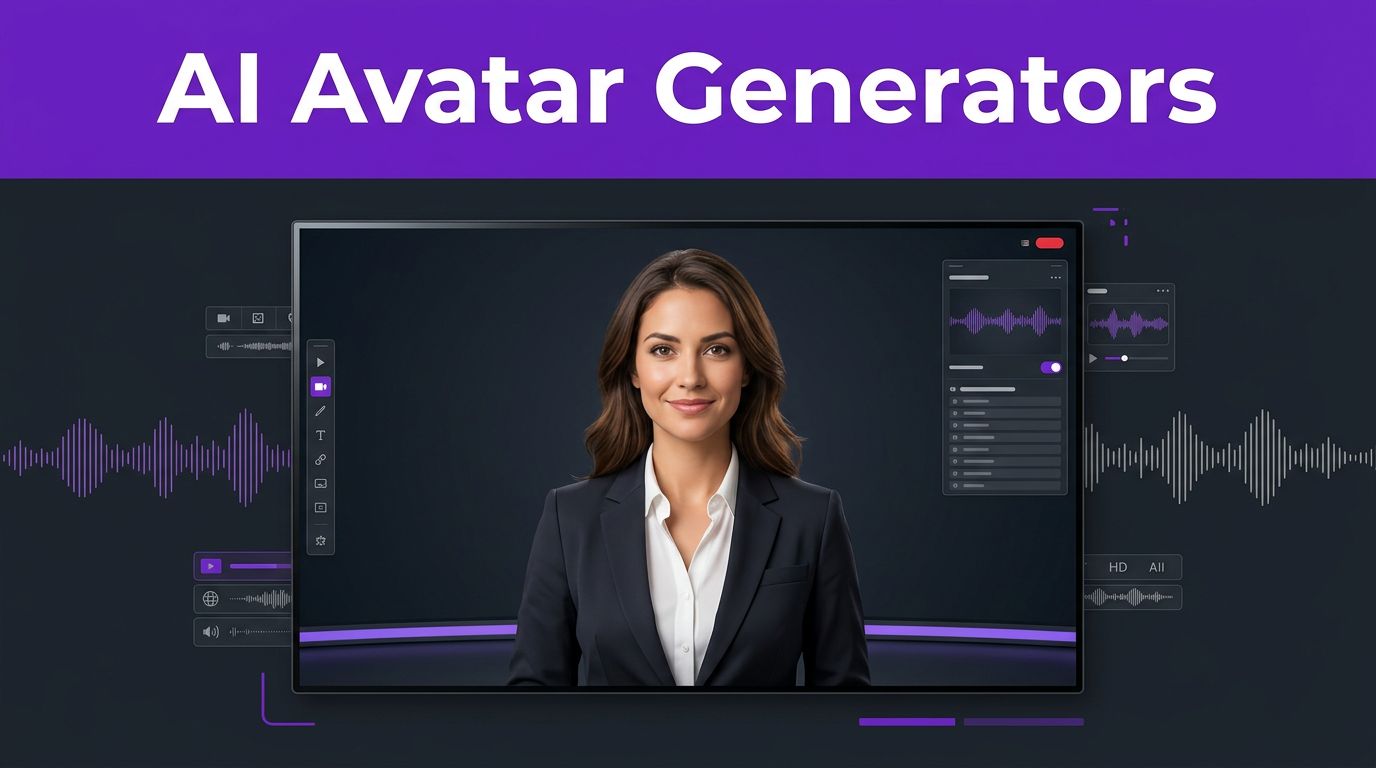


A polished spokesperson video no longer requires a studio booking, camera crew, or a presenter who’s free at the right moment. AI avatar generators can turn an approved script into short ads, product explainers, localized campaigns, and training videos in far less time.
The right choice depends on the job. A social team needs fast creative variations. A global brand needs strong lip-sync accuracy and convincing avatar realism across languages. A training team may need SCORM exports, SSO, and documented security controls. Pick the platform that matches your actual publishing workflow, not the flashiest demo.
Key Takeaways
- There is no single best AI avatar generator for every team. Match the platform to your workflow, whether you need social ads, multilingual campaigns, polished explainers, talking photos, or LMS-ready training content.
- HeyGen is a strong default for social and multilingual marketing, while Synthesia and Elai suit controlled presenter videos. Creatify fits UGC-style ads, D-ID fits talking-photo campaigns, and Colossyan is the clearest choice for training workflows with SCORM exports.
- Compare platforms by usable approved minutes, not subscription price alone. Include credits, translation, premium avatars, export quality, commercial licensing, and failed renders in your cost calculation.
- Test every video for pronunciation, pacing, facial movement, lip-sync accuracy, captions, and localized language before creating a full campaign. A short sample can prevent expensive rework.
- Protect your brand and audience with written consent for likeness and voice use, clear team permissions, accessible captions, and human review of regulated or customer-facing claims.
How AI Avatar Generators Fit Marketing Video Production
AI avatars combine a script, synthetic voice, digital presenter, and scene template into a presenter-led video. They work best when your message matters more than a live location, hands-on product demonstration, or spontaneous human emotion. Check lip-sync accuracy, pacing, and pronunciation before publishing presenter-led output.
Text-to-video works best for repeatable messages
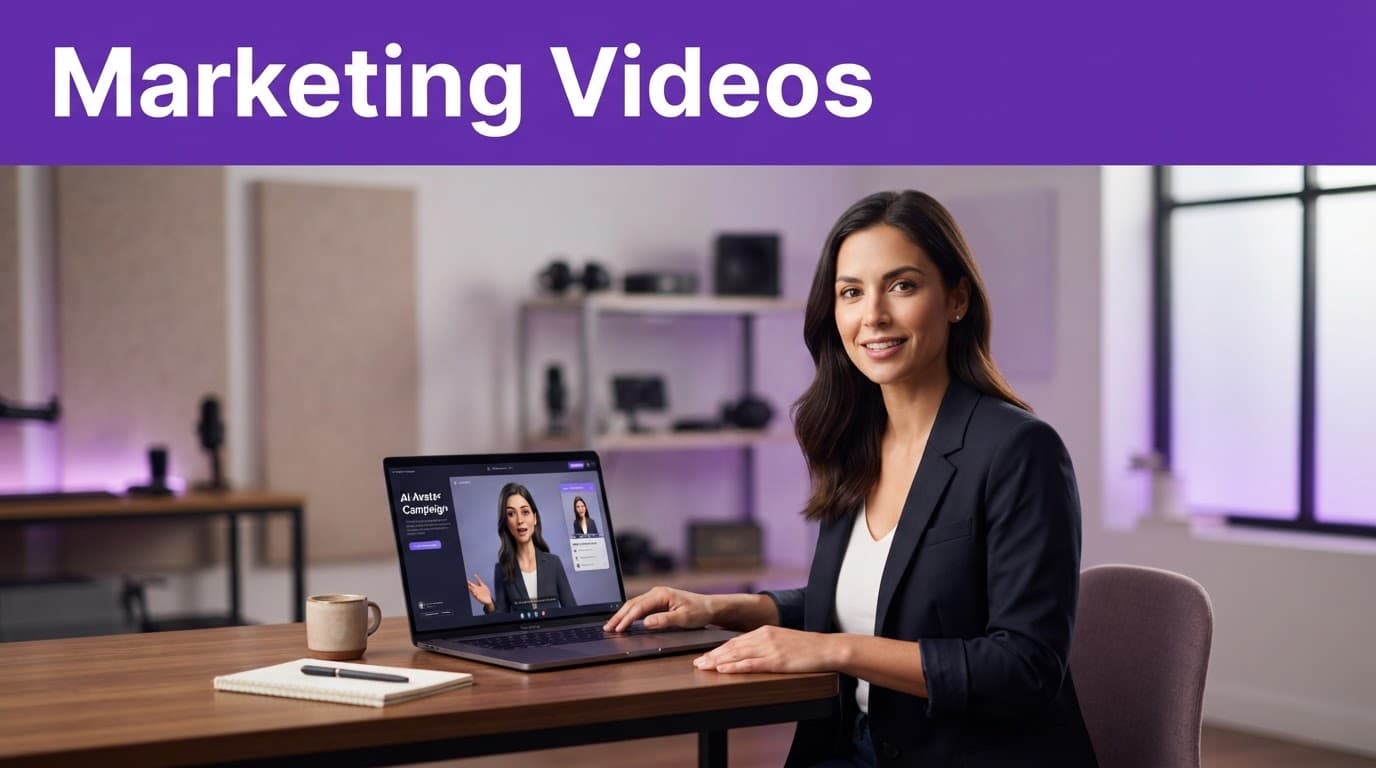
Text-to-video is the standard workflow. You select an avatar, paste a script, choose a voice, add visuals, then export in a vertical or horizontal format. It works well for product feature updates, onboarding sequences, landing-page videos, webinar promotions, and sales outreach.
Marketing teams can produce several localized versions from one approved master script. However, the avatar won’t fix weak positioning. Write the hook, customer problem, proof, and call to action in natural speech before opening the video editor.
Most platforms also let you swap scenes after the initial render. That makes it easier to test a direct opening against a problem-first opening without rebuilding the entire video.
Talking photos and digital twins solve different problems
A talking-photo workflow animates a still image with speech. D-ID is a practical choice when you need photo avatars or a quick spokesperson treatment, and its Studio plans list both video and photo avatar options.
A digital twin is more involved. It uses footage or a guided capture session to create a custom avatar based on a real person. Review facial movement and micro-expressions, then test a custom capture or render for lip-sync accuracy before launch. Use it for a founder, product expert, or recurring brand presenter who has given written approval.
Stock avatars are faster to launch. Custom avatars give you stronger brand recognition, yet they also raise the bar for avatar realism, lighting, wardrobe, speech style, consent, and ongoing quality checks.
The Best AI Avatar Generators, Matched to the Job
There is no single winner for every team. These picks reflect marketing fit, governance needs, and production speed. Output quality, lip-sync accuracy, and rendering speed also matter more than a generic feature count.
| Platform | Best fit | Check before buying |
|---|---|---|
| HeyGen | Social campaigns and multilingual marketing videos | Credit usage, translation costs, and custom avatars |
| Synthesia | Enterprise explainers and controlled internal communications | Plan limits, guest seats, and required brand controls |
| Creatify | UGC-style paid ads and performance creative testing | Commercial terms and the range of ad formats in your plan |
| D-ID | Talking-photo campaigns and quick presenter clips | Commercial license terms and video limits |
| Colossyan | Training content, LMS distribution, and compliance programs | SCORM export allowances and custom-avatar fees |
| Elai | Branded presenter videos with selfie-avatar options | Which voice-clone and avatar features your tier includes |
HeyGen is the strongest default for marketers who need frequent social versions and broad multilingual support. Its Creator plan includes more than 175 languages and one voice clone, while its paid tiers add longer videos, more credits, and higher export quality.
Synthesia suits enterprise video when a company needs shared workspaces, brand kits, SSO, and formal team controls. For a useful feature and pricing contrast, review this HeyGen and Synthesia comparison.
As of August 2026, HeyGen offers a free tier, while Creator starts at $29 per month or $24 per month with annual billing. Synthesia has a free Basic plan, with Starter listed at $29 monthly or $264 annually. Features and quotas change by plan, so confirm them inside the account before committing.
Best Options for Social Media and Product Ads
Short-form video production rewards a clear hook and believable human delivery. Credible avatar realism can support that approach in social media content, but it can’t replace either one.
AI avatars should clarify the message rather than distract from it.
HeyGen and Creatify for performance marketing experiments
HeyGen is a strong option for teams producing TikTok, Instagram Reels, YouTube Shorts, and paid social variants. Build one approved core message, then test different opening lines, presenters, languages, and calls to action.
Creatify belongs on the shortlist for teams producing ads designed to resemble user-generated content. A talking head video can feel more native in a social feed than a polished corporate presentation. Still, an avatar is not a real customer, so don’t present a synthetic testimonial as a genuine buyer review.
Performance marketing works best when video variants connect to a real conversion goal. This AI video lead generation guide is useful when you need to connect creative testing with lead quality rather than views alone.
For hands-on examples of this format, see these AI avatar ads for social media. Product-in-hand scenes, fast reactions, and casual scripts can work, but inspect every render closely. Check AI-generated hands, labels, packaging, and lip-sync accuracy before publishing.
Synthesia and Elai for polished product explainers
Product explainers need consistency more than novelty. Synthesia suits teams that want an approved presenter style across product launches, customer education, and internal sales enablement. Its Enterprise offering includes shared workspaces, organizations, brand kits, SSO, and higher API limits.
Elai is worth considering when a custom presenter is part of the brief. Its pricing structure includes Free, Creator, Team, and Enterprise plans. The Team annual subscription lists one selfie avatar and one voice clone, so confirm whether those are available on the plan you want.
Keep explainers focused. Show a single customer problem, the product action that resolves it, and the resulting outcome. A 45-second video with one memorable claim usually beats a three-minute tour with six disconnected features.
Multilingual Campaigns and Training Video Picks
Video translation is one of the clearest reasons to use avatar video. It can cut production time when the same approved message must reach several markets.
Localized campaigns need human language review
HeyGen is a practical choice for multilingual marketing because its Creator plan lists support for 175-plus languages. Paid plans can also offer more editing control for translated scripts.
Yet video translation isn’t a word-for-word task. Localization must cover currency, dates, idioms, product names, regulatory claims, and calls to action. Ask a fluent reviewer to check the translated script and the rendered result for lip-sync accuracy before publication.
Record a 10-second test before producing ten language versions. Watch it with sound on and captions enabled, checking lip-sync accuracy. If an acronym, product name, or regional phrase looks awkward, rewrite it phonetically or use a local pronunciation guide.
Good lip-sync cannot rescue a message that sounds translated. Local market review is part of the production process.
Colossyan is the clearest training choice
Colossyan fits corporate training teams that need training videos to move into an LMS. Its Professional plan is listed at $59 per month with annual billing and includes five SCORM export allowances monthly. Enterprise plans offer unlimited SCORM exports in streaming and self-contained formats.
According to Colossyan’s pricing details, its SCORM exports support SCORM 1.2 and 2004 for LMS platforms such as Workday, Cornerstone, Docebo, Litmos, and Absorb. It also lists SOC 2 Type II certification, GDPR compliance, and EU or US data residency for Enterprise plans.
A studio custom avatar is listed as a $1,000-per-year add-on, which can make sense for a large learning library. For smaller teams, stock presenters may produce better value.
If training content handles financial, health, legal, or safety topics, have an accountable subject-matter expert approve every script. Video speed is useful, but unreviewed instructions can create expensive mistakes.
Compare pricing plans by usable video, not subscription price
A $29 plan sounds inexpensive until you discover that translation, premium avatars, high-resolution exports, or rapid credits use more of the allowance than expected. Pricing pages are starting points, not a complete video production budget.
Calculate your actual cost per approved minute
Use this simple formula:
Monthly subscription cost plus add-ons, divided by final approved minutes published
For example, if a team pays $29 and publishes three approved 30-second videos, the subscription cost equals about $19.33 per final minute before editing time. If the team publishes six 30-second variants, that cost falls to about $9.67 per final minute.
Count only videos you can use. Failed renders, internal tests, drafts rejected by legal, and versions with incorrect product claims still consume time and, in some tools, credits.
D-ID’s public API pricing also calls out a commercial license on paid plans. Review the commercial-license terms if you plan to use outputs in ads, sales pages, or client projects.
Free plans are for evaluation, not campaign volume
Free tiers and a free trial are helpful for testing avatar realism, voice quality, editing flow, and lip-sync accuracy. HeyGen’s free plan allows three videos each month, up to one minute each. Synthesia’s free Basic plan is designed for trying the editor and its avatars.
Use free access to create three realistic tests:
- A 30-second social ad with a product claim and call to action.
- A short localized version with an important product name or industry term.
- A training or explainer scene with captions, branded visuals, and a required disclaimer.
Don’t judge a platform by one attractive demo template. Review the exported file on mobile, desktop, and with sound muted.
Protect Your Brand, Your Audience, and the People You Feature
AI avatars can become recognizable brand assets. Treat their voices, appearances, and permissions with the same care you would apply to a paid spokesperson.
Get explicit consent for likeness and voice use
Get a written agreement before creating a digital twin, using voice cloning, or animating a person’s photo. The agreement should state where the content can appear, whether paid advertising is allowed, how long the rights last, and who can approve future scripts.
This applies to founders, employees, contractors, influencers, and customers. A headshot on a company website does not automatically grant permission to turn that person into a speaking avatar.
Avoid synthetic endorsements for products that affect health, financial decisions, employment, or safety. The presenter can explain a product, but it shouldn’t impersonate an independent customer or professional authority.
Set brand rules before the team starts producing
Create a small approved library of presenters, voices, intro scenes, claims, and closing calls to action. Lock the correct logo treatment, colors, terminology, and product screenshots into templates wherever the platform allows it.
Team access matters as well. Ask vendors about SSO, role permissions, audit logs, data retention, data-processing agreements, deletion requests, and whether uploaded footage can train models. Public enterprise labels do not answer every procurement question.
For regulated use cases, compare your requirements with each vendor’s documentation. HeyGen’s compliance training comparison is a useful starting point, but your legal and security teams should review the final contract.
Make every avatar video accessible
Add accurate captions to every marketing and training video. Captions help viewers who are deaf or hard of hearing, people watching silently, and audiences who speak the language as a second language.
Also provide a transcript for longer videos. Keep on-screen text readable, use strong contrast, and avoid communicating a required action through color alone. Review lip-sync accuracy after changing a presenter or language. Check caption timing after translations, because longer phrases can run ahead of the visual scene.
A Practical Workflow for Marketing Teams and Agencies
The fastest teams don’t begin video editing with a blank page. They start with a tightly approved message and a small video production system.
Build the script before you select an avatar
Start with the audience, offer, customer problem, proof point, and one action you want viewers to take. Then write a natural spoken script, not a blog paragraph pasted into a voice field.
For first drafts and ad-angle variations, Free AI Tools can help your team generate options. A marketer should still check every product claim, statistic, and promise before the script enters production.
Keep sentences short. Write out uncommon acronyms the way people say them. Add pauses where a presenter should breathe, then remove filler that makes the voice sound stiff. For interactive video, map viewer choices before writing or rendering each path.
Use a controlled review loop
Produce one master version first. Review the script, voice pronunciation, lip-sync accuracy, captions, background visuals, and call to action with the people who own the brand and product.
After approval, create the format and language variants. Agencies should document the approved avatar and voice for each client. That prevents a different presenter or tone from slipping into the next campaign.
Track performance by version as part of performance marketing. Compare hook, audience, platform, length, and call to action. A higher watch rate matters, but qualified leads, demo requests, sales, and completed training modules tell you whether the video earned its production cost.
Fix Common Avatar Video Problems Before Launch
Most production failures are preventable if you test early and keep each version simple.
Improve weak lip-sync and synthetic delivery
First, slow down the script. Long sentences, crowded clauses, acronyms, and unfamiliar product names can reduce lip-sync accuracy and cause unnatural mouth movement.
Next, use punctuation to guide pacing. A short sentence followed by a natural pause often sounds better than one line packed with features. Check eye movement, facial behavior, and micro-expressions, not just mouth movement.
If the platform offers alternate voices, compare at least two before building the entire campaign. Voice choice can affect avatar realism and how natural the presenter feels.
For translated videos, get feedback from a native speaker. Accurate spelling does not always produce the expected pronunciation.
Avoid expensive rework after rendering
Render a short sample before adding every scene, translation, and media asset. This protects your credits when a voice, avatar, or visual style is wrong.
If a render fails, simplify the project. Remove unsupported media, test one scene, check the script for unusual characters, and confirm that your plan covers the selected avatar or export quality. Keep a clean master script outside the platform so you can move to another tool without rebuilding the message.
Frequently Asked Questions
What is the best AI avatar generator for marketing videos?
There is no universal winner because the best option depends on your publishing workflow. HeyGen is a strong default for social and multilingual campaigns, while Synthesia, Colossyan, Creatify, D-ID, and Elai each fit more specific production needs.
Should I use a stock avatar, talking photo, or digital twin?
Stock avatars are the fastest to launch and work well for repeatable marketing or training messages. Talking photos suit quick spokesperson treatments, while digital twins are better for recurring presenters such as founders or product experts who have provided written consent.
Can AI avatar generators create multilingual marketing videos?
Yes, many platforms can translate an approved script and generate versions in multiple languages. A fluent reviewer should still check idioms, product names, calls to action, pronunciation, captions, and lip-sync accuracy before publication.
What should I test before choosing an AI avatar platform?
Create short tests for a social ad, a localized message, and a branded explainer or training scene. Check avatar realism, voice quality, lip-sync, editing workflow, export limits, credit usage, commercial terms, security controls, and the final file on both mobile and desktop.
Choose the Tool That Fits the Job
The best AI avatar generators save time when the platform matches your audience, publishing workflow, and goals. HeyGen suits social and multilingual output. Synthesia and Colossyan fit teams that need governance, brand controls, LMS delivery, or formal training.
Start with one campaign that has a defined audience, publishing plan, and measurable goal. A well-reviewed 30-second video will tell you more than a dozen unplanned experiments. It gives your team a reliable foundation for larger campaigns or training projects.